By 1976, I had completed my medical residency at the Royal Adelaide Hospital and then moved on to specialist training. Suddenly, I had a disposable income of more than enough to invest in some new speakers. Given my love of classical music and all things “ High Fidelity”, it was de rigeur to subscribe to “The Gramophone”. It was my Bible for all things related to hi-fi equipment, as well as dictating my choice of classical records according to the reviews. The general perception, if not hard-core recommendations in the 1970s, was that for speakers, one must go British, or perhaps American, avoiding at all cost Japanese speakers. But when it came to amplifiers, increasingly, the Japanese were developing a reputation for high-quality products.
Regarding turntables, there were two choices in terms of basic mechanisms. On the one hand, there were the more robust and older belt-driven turntables, whilst on the other, there was increasing discussion about direct-drive turntables. Little point in going into the pros and cons, but for me, I eventually settled on the Thorens TD125 MkII, with its heavy cast iron platter, weighing almost 3 Kg
In those days, there was only one unarguable choice for the tonearm if you wanted to be tolerated in the upper echelons of the hi-fi fraternity, and that was the SME 3009 Series 2 Tone Arm. It was an engineering work of art in polished aluminium and steel, all floating in a bed of damping oil!
Along with discussion about turntable mechanisms, there was also discussion and opinions about moving coil, as opposed to moving magnet stereo cartridges. According to the pages of the Gramophone magazine, it appeared that most people chose the combination of the SME tonearm, with a Shure V15 III moving magnet cartridge.
As I sit here, writing this piece, I reflect on the fact that firstly, the equipment I’ve described above is by no means cheap! Secondly, we didn’t have the Internet and access to all the user groups to discuss and compare our Hi-Fi equipment in real time. Rather, we would pour over published magazines in hardcopy, waiting, expectantly for the next month’s copy of “The Gramophone”, which would arrive frustratingly, two or three months after publication in Britain.

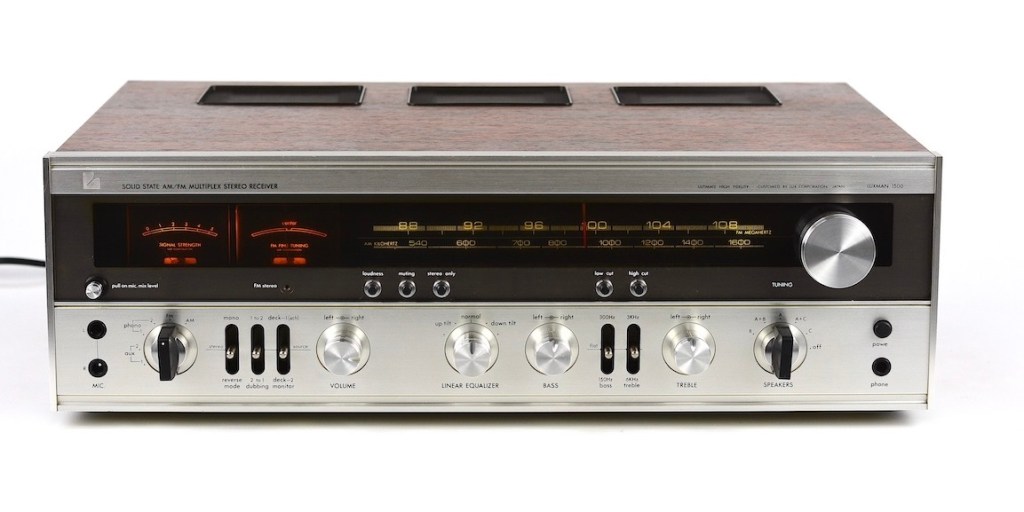
Having assembled this awe-inspiring combination of German and English engineering for the turntable tonearm and an American cartridge, I then “went Japanese,” selecting the recently released Luxman RC 1500 Stereo amplifier receiver. As far as I can recollect, one of the reasons why I decided on the “receiver ” built-in was that the ABC had recently commenced FM transmission.
Now it only remains for me to tell you the story of how I came to select and build my delightful Tannoy speakers
 A Bifed Uvula